
Loading ...
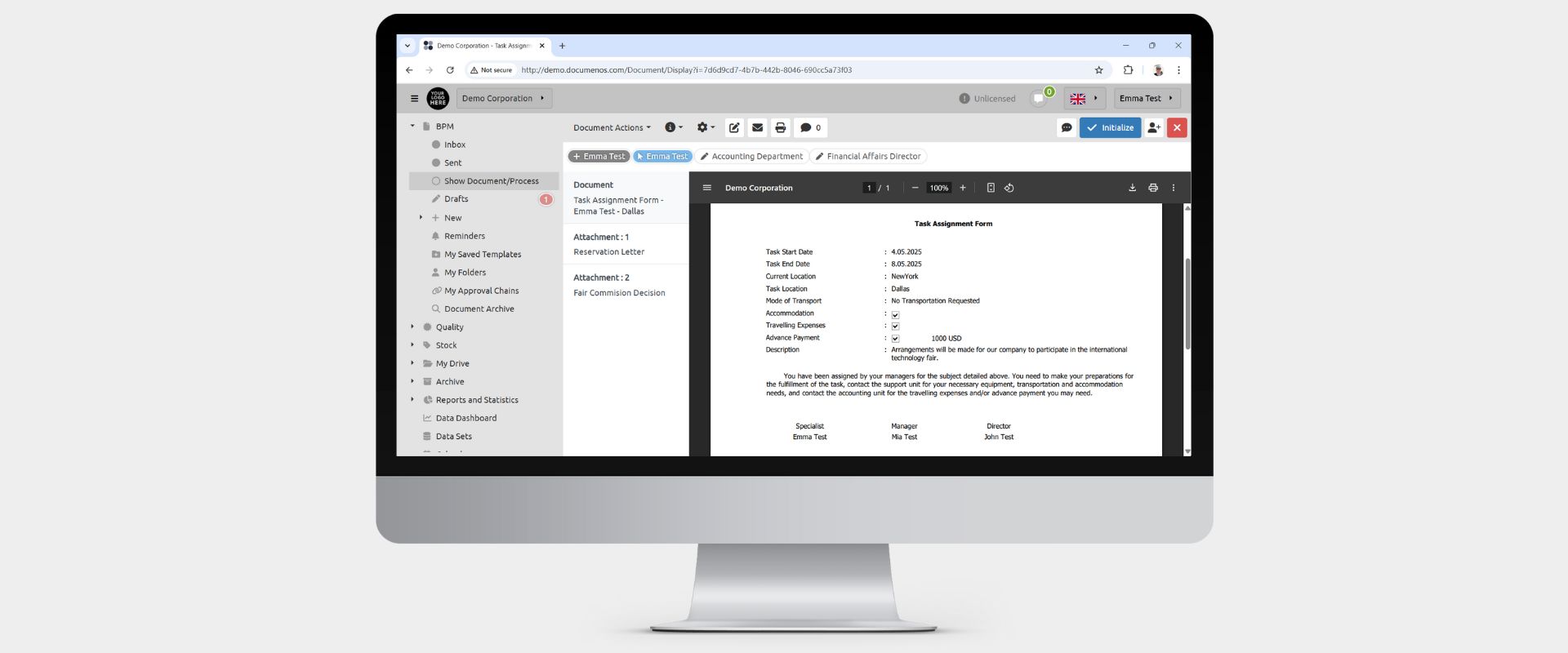


You can design complex forms consisting of fields and tables by connecting them to the data sources you want.

Define who will do what action in what order on the forms. It is possible to design the life cycle of each form with unlimited possibilities and the most flexible options.

You can create rules as you wish so that the forms can be prepared. You can complicate your rules without writing a single line of code and using different options such as and / or / equals / contains / does not include /greater than / less than /starts with.

While publishing your forms, you can make them specific to a certain unit or group, or you can make them accessible on the Internet so that people from the public can fill out the form and follow the business processes in your organization with these forms.



You can analyze the information contained in the forms at any time. You can get the reports you want for form data on pivot tables.

You can archive your document and process data according to the rules you want. In addition, using the capabilities of the digital archive module, you can automatically archive and make available all kinds of data from unlimited sources.

It provides triggers (mail, sms, exe, api etc.) for events that occur during the lifecycle of documents (creation, approval, signature, return, rejection, completion). It also allows you to create documents from incoming emails by listening to your corporate emails.
It provides the opportunity for internal and external users to add electronic signatures to document processes.