
Loading ...
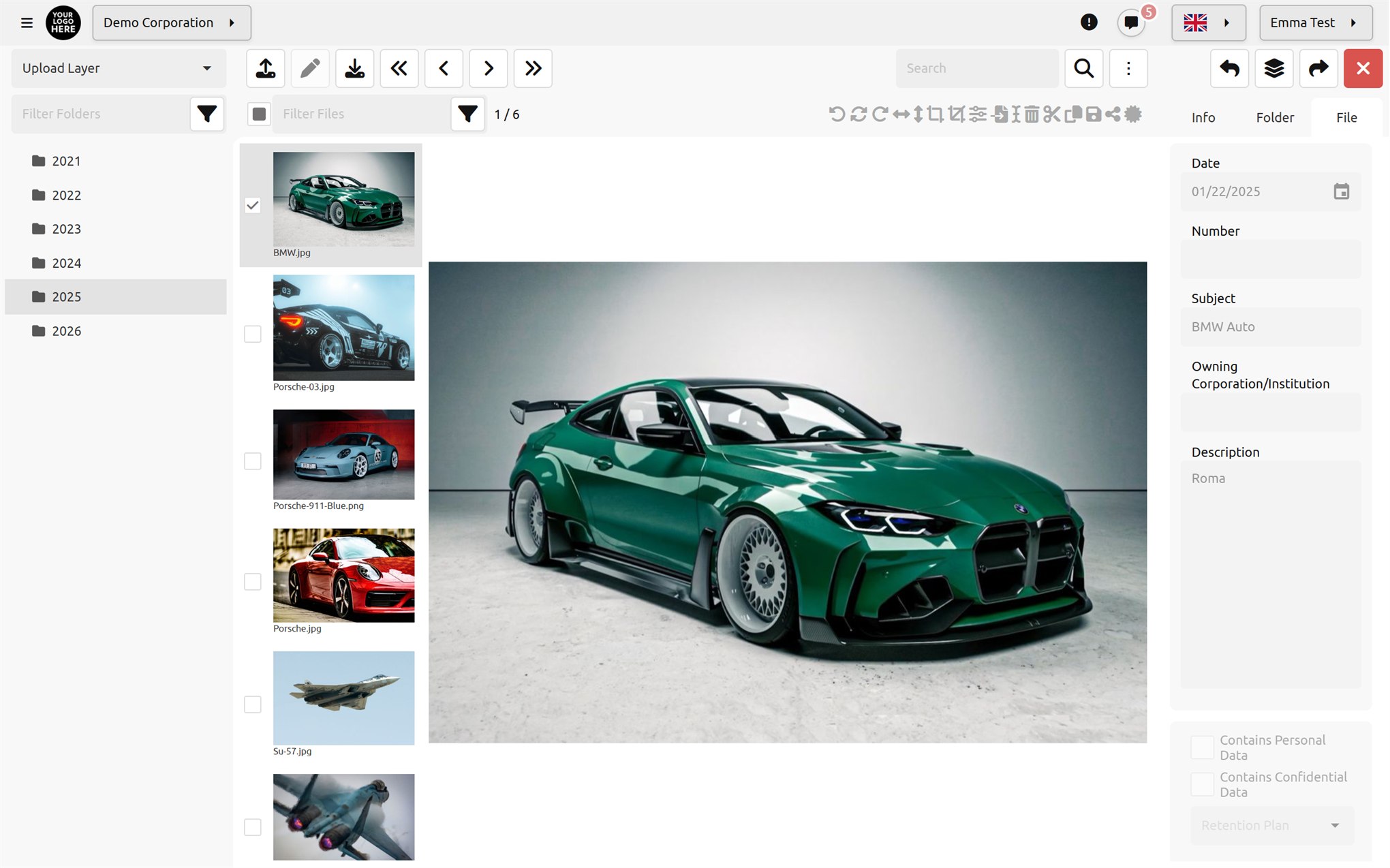
The application's archive module records and preserves the cultural heritage of companies and institutions. It is used to back up information sources produced as single printed copies; provide multiple access to single-copy sources; reduce the cost of paper documents and storage; implement enterprise content management solutions; ensure archive preservation; protect the integrity of digital objects in the face of changing technology while enabling the viewing, access and use of resources; and make available millions of books, pages, photos, videos or audio recordings, and all kinds of digitised data that are stored in company or institutional libraries and document archives but never reach users from their shelves or storerooms.
The key competencies your organization will gain in electronic document archiving with this application are as follows: Thanks to the multi-archive management infrastructure, digitization processes for different archives can be managed simultaneously at different levels. The purpose of the materials to be obtained can be determined and easily managed from the management interface. Unlimited possibilities for data access are obtained thanks to APIs that provide data for different applications. Thanks to the multi-archive system, different decisions can be made according to the quality required for the purpose of each separate project. Digital media and access options can be easily managed. The possibilities offered by digitization to those who will access this environment can be managed. Since digital media storage environments are very diverse, slow or fast, secure or less secure environments can be preferred according to need and cost preference.
In compliance with personal data protection legislation, the most advanced security settings can be applied at different levels for each archive.
Options for loading data into the electronic records archive are highly varied to suit your organisation's needs. Electronic records can be uploaded to the application via SOAP-API or REST-API. With the appropriate setting, the application can watch any FTP server or DISK location you choose, and content saved there can be archived automatically.

Manages digitisation processes. Allows an unlimited number of dynamic index fields to be defined for each archive.

Manages physical archives across hierarchical levels such as building, room, cabinet and shelf, together with the asset types they contain.

In addition to access-level management, provides access settings at archive, layer and folder level. Gives researchers temporary, controlled access to archives.

Continuously and automatically loads data into the archive system from disk storage or FTP servers.

Spreads digital archive production processes across multiple layers to ensure process security, simplify complex processes and enable performance measurement.

Lets you share documents securely with internal or external users.

Lets you perform dozens of photo functions such as cropping, rotating and adjusting contrast, colour or sharpness directly in your web browser. You can also trim specific segments of videos to create new ones.

Provides archive usage statistics, file movements and access analysis.

Provides permission-based search and access features for documents containing confidential or personal data.

Access privileges can be set differently for each archive and customised by layer or folder.

You can configure in detail who can access any material in the archive, when and from where, and whether they are allowed to edit, download or share the data they access.

Makes images added to the archive searchable through automatic OCR. With the help of artificial intelligence (AI), it converts speech in audio files to text in 100+ languages and enables search within videos.

Allows users to manage their personal documents in private folders.



You can manage multiple archives within each company. Each archive can be kept in a different data storage location, with different rules and security policies applied.

You can run automatic OCR on archives and also automatically index metadata such as IPTC and EXIF.

An archive's content can be imported automatically and continuously from disk or an FTP server.

Documenos® provides every tool you need to run archiving work as a process using scientific methods.